Last Updated on January 8, 2026
People struggling with alcohol are often given advice that’s as simple as it is frustrating: just stop drinking.
It sounds logical, on its face. If alcohol is causing problems, removing it should fix them. But for many people, that advice falls apart — not because they lack motivation or resolve, but because it misunderstands how alcohol works in the brain over time.
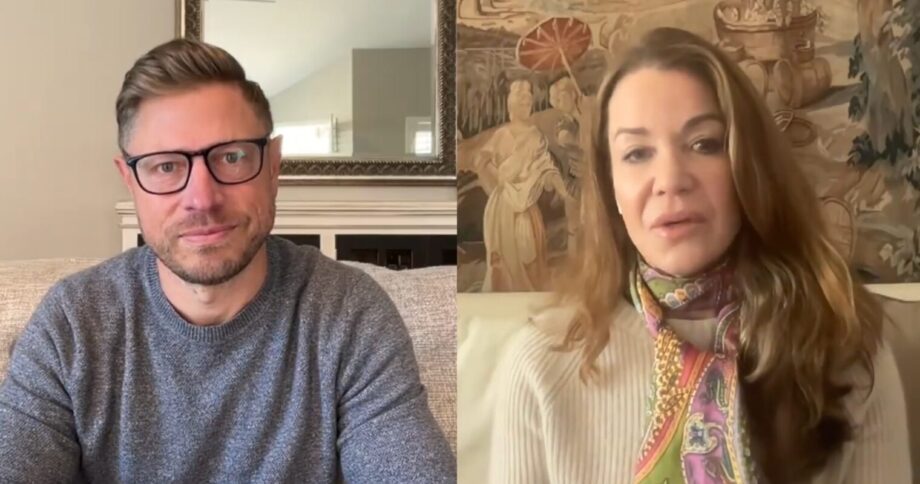
Actor, author, and recovery advocate Claudia Christian has spent years challenging the idea that willpower alone is the solution, including in her viral TEDx talk. Her work has helped bring attention to alcohol use disorder as a condition with real biological drivers, not a moral failing or a personal defect. “People make it seem like it’s a choice. ‘Well, just stop drinking,'” she says. “Well, that’s not helpful.”
Watch The Related Podcast with Claudia Christian
Why “Just Stop Drinking” Often Doesn’t Work
The suggestion to simply quit drinking assumes that alcohol use disorder is primarily a behavioral issue, something that can be overridden with enough discipline. But neuroscience paints a more complicated picture.
Alcohol affects the brain’s reward system, reinforcing patterns that link drinking with relief, pleasure, or emotional regulation. Over time, those associations strengthen. Cravings aren’t random. They’re learned responses, triggered by cues, stress, and habit.
This is why so many people experience a familiar cycle:
- A clear intention to cut back or stop
- A stretch of progress
- A sudden, intense urge to drink
- A return to old patterns, often followed by guilt
From the outside, it can look like an inconsistency. Internally, it often feels like losing control.
“People blame themselves because they think they should be able to override cravings,” Christian explains. “But cravings aren’t a character flaw. They’re chemistry.”
How Naltrexone Fits Into the Picture
Naltrexone is a non-addictive medication that has been used for decades in the treatment of alcohol use disorder. It works by blocking opioid receptors involved in alcohol’s rewarding effects, which can reduce the reinforcement that keeps cravings strong.
In practical terms, many people find that drinking no longer produces the same neurological “reward.” Over time, this can weaken the learned connection between alcohol and pleasure or relief, making cravings easier to manage.
Christian has spoken openly about how meaningful this reframing was for her.
“I stumbled upon targeted use of naltrexone in 2009, and it was so unbelievably impactful in a positive way in my life that I just wanted to scream it from the rooftops,” she says.
Importantly, naltrexone does not force abstinence, and it doesn’t work the same way for everyone. It’s one tool — not a mandate, and not a shortcut.
Why Willpower Still Isn’t Enough on Its Own
Willpower is often treated as the centerpiece of recovery. When people struggle, the assumption is usually that they didn’t try hard enough.
But willpower is limited — especially when it’s competing with a conditioned neurological response that’s been reinforced over years.
“[That response] was this constant chatter in my head,” says Christian. “So how am I supposed to pay attention? Everything was annoying because I had cravings.”
Medication like naltrexone doesn’t replace effort or accountability. Instead, it can lower the baseline intensity of cravings, giving people more room to make intentional choices rather than reactive ones.
What Naltrexone Can’t Do — and Why That’s Important
One of the most grounded aspects of Christian’s advocacy is her emphasis on limits. Naltrexone isn’t a cure, and it isn’t meant to work in isolation.
That distinction is essential. Medication-assisted treatment is often misunderstood as an attempt to “solve” recovery with a pill. In reality, it’s about alleviating constant neurological pressure, making other changes more accessible.
For many people, that includes:
- Shifting habits and routines
- Addressing emotional or psychological drivers
- Building support systems
- Practicing new coping strategies
“What the medication does is it helps you reduce and stop the cravings, the physical and mental cravings, and that is a godsend,” Christian says.
Moving Away From Shame-Based Recovery
Perhaps the most lasting impact of Christian’s work is the way it reframes alcohol use disorder altogether.
Instead of asking, “What’s wrong with me?” the question becomes: “What’s happening in my brain — and what helps?”
That shift replaces self-blame with understanding and replaces judgment with curiosity. And hope, which is what keeps many people engaged long enough to make real progress.
A More Realistic Way Forward
The limits of “just stop drinking” don’t point to weakness. They point to incomplete advice.
By acknowledging the biological forces behind alcohol cravings — and evidence-based tools like naltrexone that can help reduce them — a more humane, realistic approach becomes possible. One that respects personal agency without ignoring biology.
Christian’s message isn’t about lowering standards or avoiding responsibility. It’s about replacing shame with understanding and giving people options that actually reflect how change works.
“Everybody deserves a chance to recover,” she says.
Get started on your mindful drinking journey with a 15-day free trial of Sunnyside.

What is Sunnyside?
Sunnyside is a mindful drinking and alcohol moderation app that can help change your habits around alcohol using a proven, science-backed method. Whether you want to become a more mindful drinker, drink less, or eventually quit drinking, Sunnyside can help you reach your goals. We take a positive, friendly approach to habit change, so you never feel judged or pressured to quit.
When you join Sunnyside, you’ll start by completing a 3-minute private assessment so we can learn a bit about you. Once that’s done, you’ll get a 15-day free trial to test out everything, including our daily habit change tools, tracking and analytics, community and coaching, and education and resources. It’s a full package designed specifically to adapt to your goals and help you reach them gradually, so you can make a huge impact on your health and well-being.
Sunnyside is a digital habit and behavior-change program that is incredibly effective on its own, but can also be the perfect complement to other work you’re doing to cut down on drinking, whether that includes talk therapy or medication such as Naltrexone.
Get your 15-day free trial of Sunnyside today, and start living your healthiest life.